Abortion opinion: deadlock or generational replacement?
Draft. This post uses the Bayesian cohort–period model (model10) on the GSS legal abortion under stated circumstances battery (abdefect through abany) to separate period (survey year) and cohort (birth cohort) contributions. The substantive question: is U.S. opinion on abortion stuck in a stable partisan / moral deadlock, or is generational replacement moving the aggregate in a direction that could eventually change politics—even if cross-sectional disagreement remains high?
Survey wording
Each item asks whether it should be possible for a pregnant woman to obtain a legal abortion under a specific condition. In the figures below, the outcome is percent saying no—that is, opposition to permitting abortion in that situation.
All seven share this opening:
Please tell me if you think it should be possible for a pregnant woman to obtain a legal abortion if
Higher baseline opposition
These scenarios (GSS variables abnomore, abpoor, absingle, abany) show higher typical opposition in the data; the composite plots put them in the upper panel (0–100% scale).
Married, no more children (
abnomore): …she is married and does not want any more children?Low income (
abpoor): …the family has a very low income and cannot afford any more children?Unmarried, will not marry father (
absingle): …she is not married and does not want to marry the man?Any reason (
abany): …the woman wants it for any reason?
Lower baseline opposition
These scenarios (abdefect, abhlth, abrape) show lower typical opposition; the composites use the lower panel (narrower vertical scale).
Serious fetal defect (
abdefect): …there is a strong chance of serious defect in the baby?Woman’s health endangered (
abhlth): …the woman’s own health is seriously endangered by the pregnancy?Pregnancy from rape (
abrape): …she became pregnant as a result of rape?
Time-only model: all scenarios
First, a period-only (no cohort) model for each item: a smooth latent trend through the national series, using the same weighting as the full APC fit. Here are all seven scenarios on two panels (higher vs. lower baseline opposition to permitting abortion).
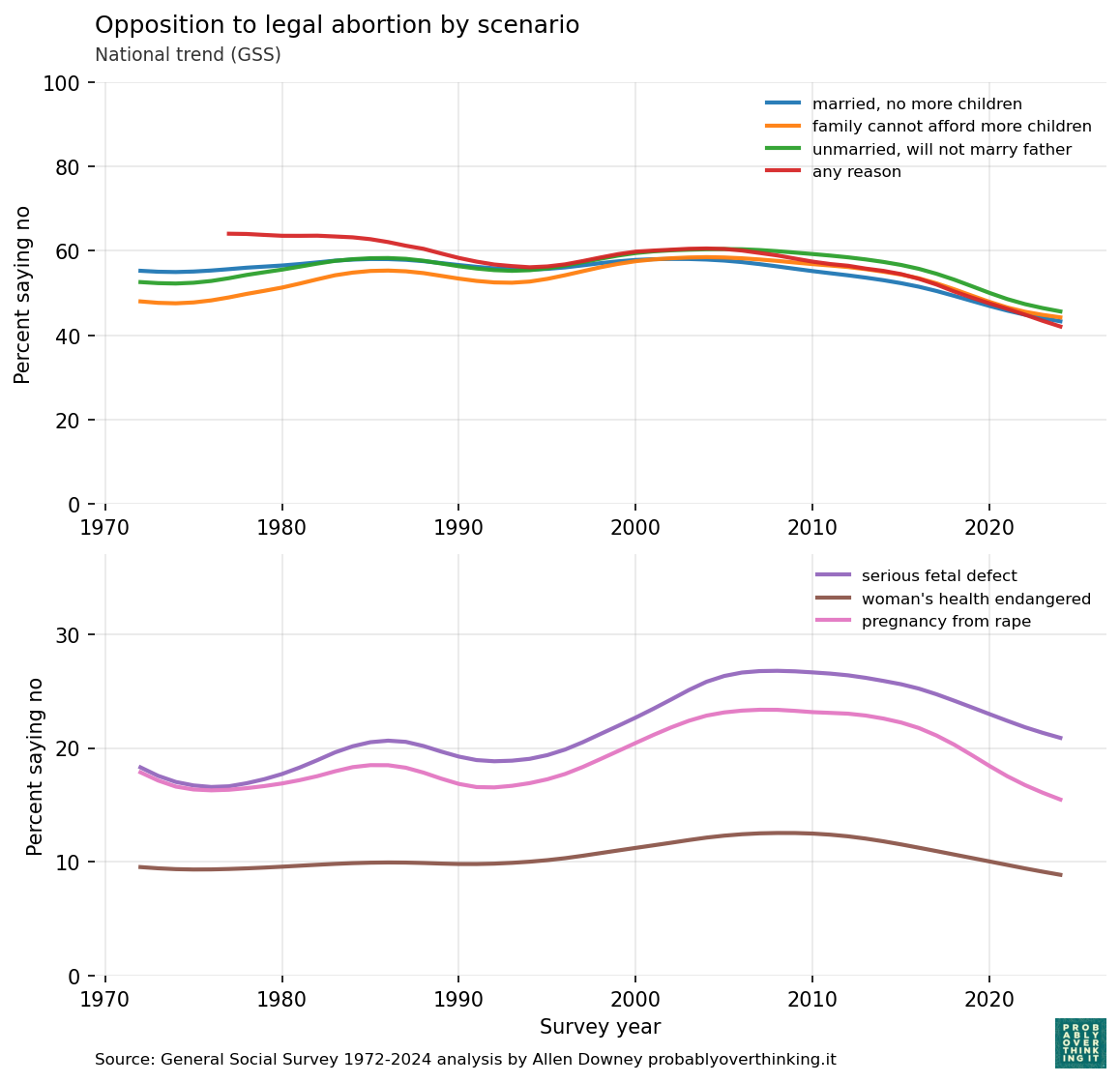
Figure 1:Time-only latent trends (percent saying no), all seven GSS abortion-permissibility items.
One item in full: “any reason” (abany)
The “on demand” item is the most polarized. Here is the full cohort–period decomposition for abany alone: cohort trajectories (each birth cohort over time), then the period margin with cohort mix held fixed, then the cohort margin with equal weight on each observed survey year.
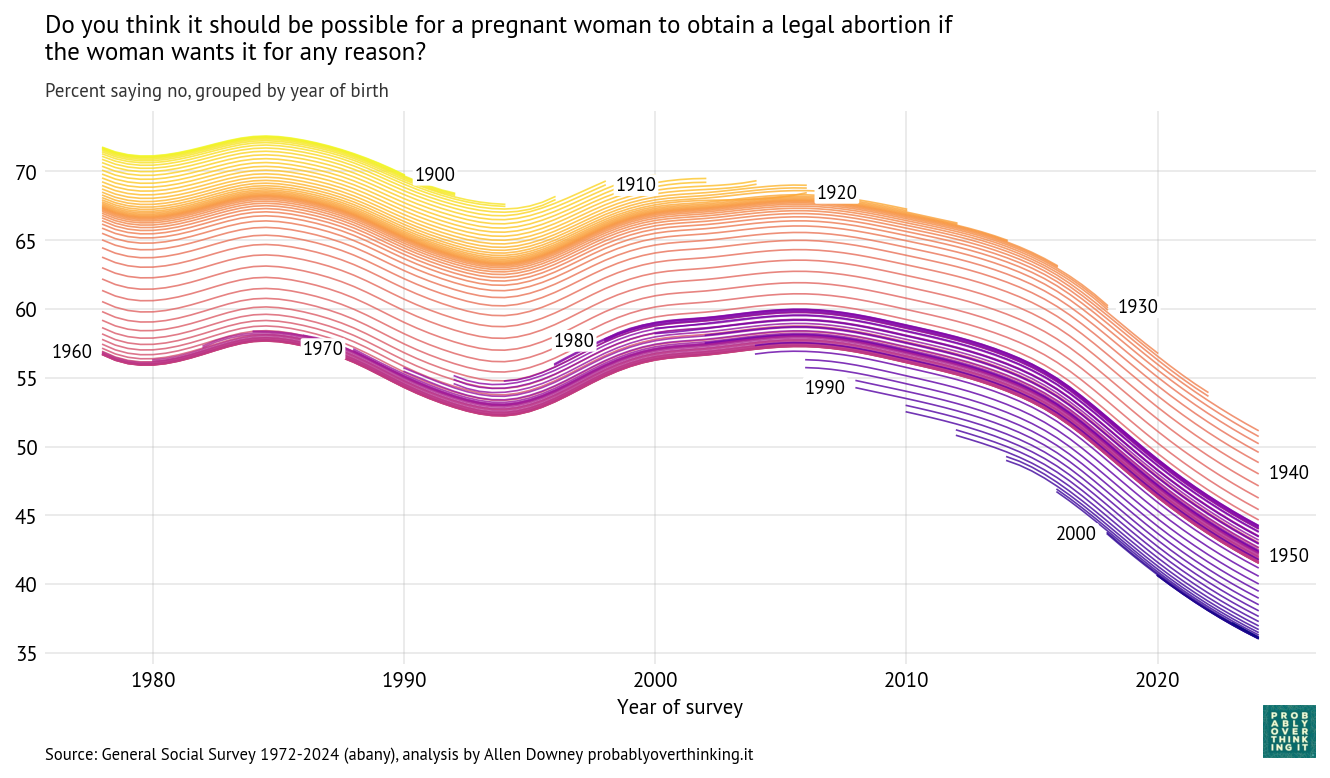
Figure 2:Cohort trajectories for abany (percent saying no to legal abortion for any reason).
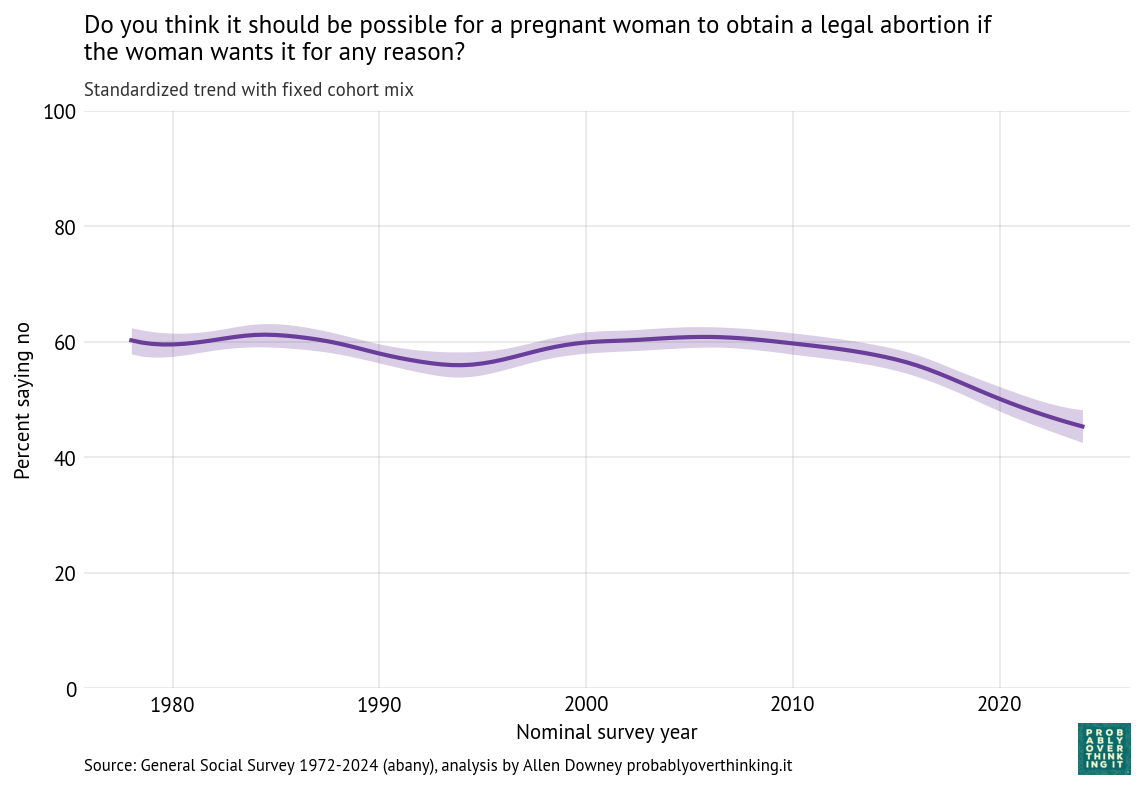
Figure 3:Period (time) component for abany: standardized trend with fixed cohort mix.
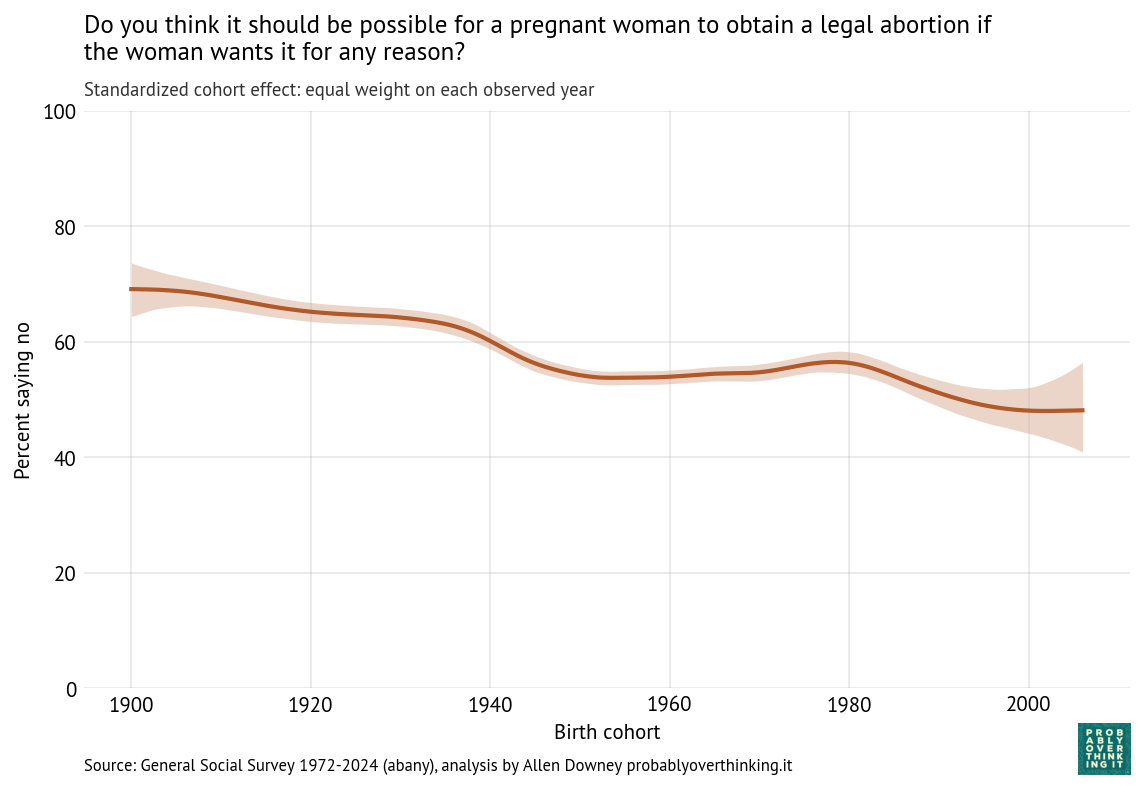
Figure 4:Cohort component for abany: uniform average over observed survey years.
All scenarios: period then cohort (APC margins)
Finally, the same decompositions for the whole battery: standardized period effects (one panel for higher-baseline items, one for lower-baseline defect / health / rape), then standardized cohort effects.
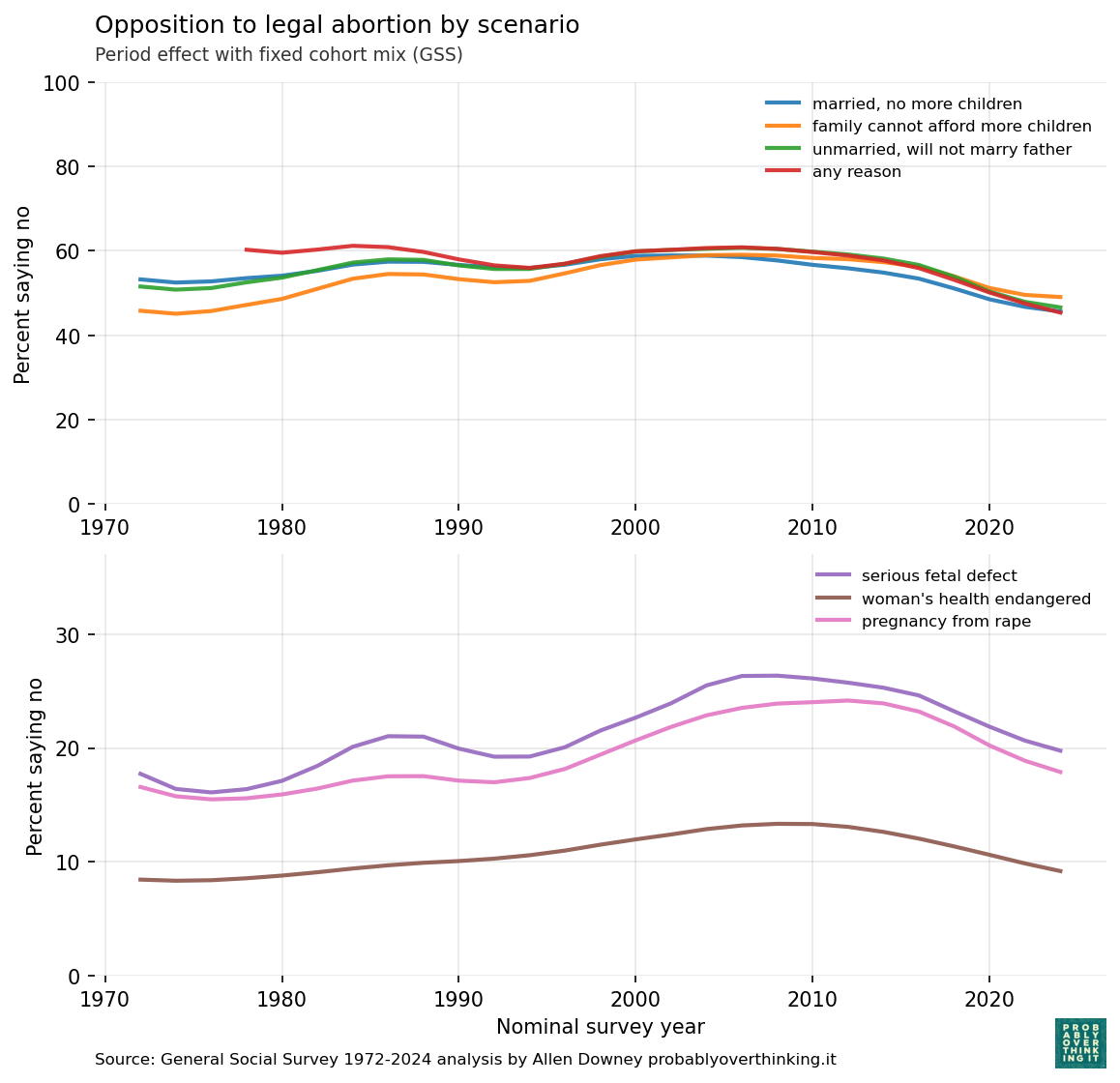
Figure 5:Combined period margins (fixed cohort mix), all seven items.
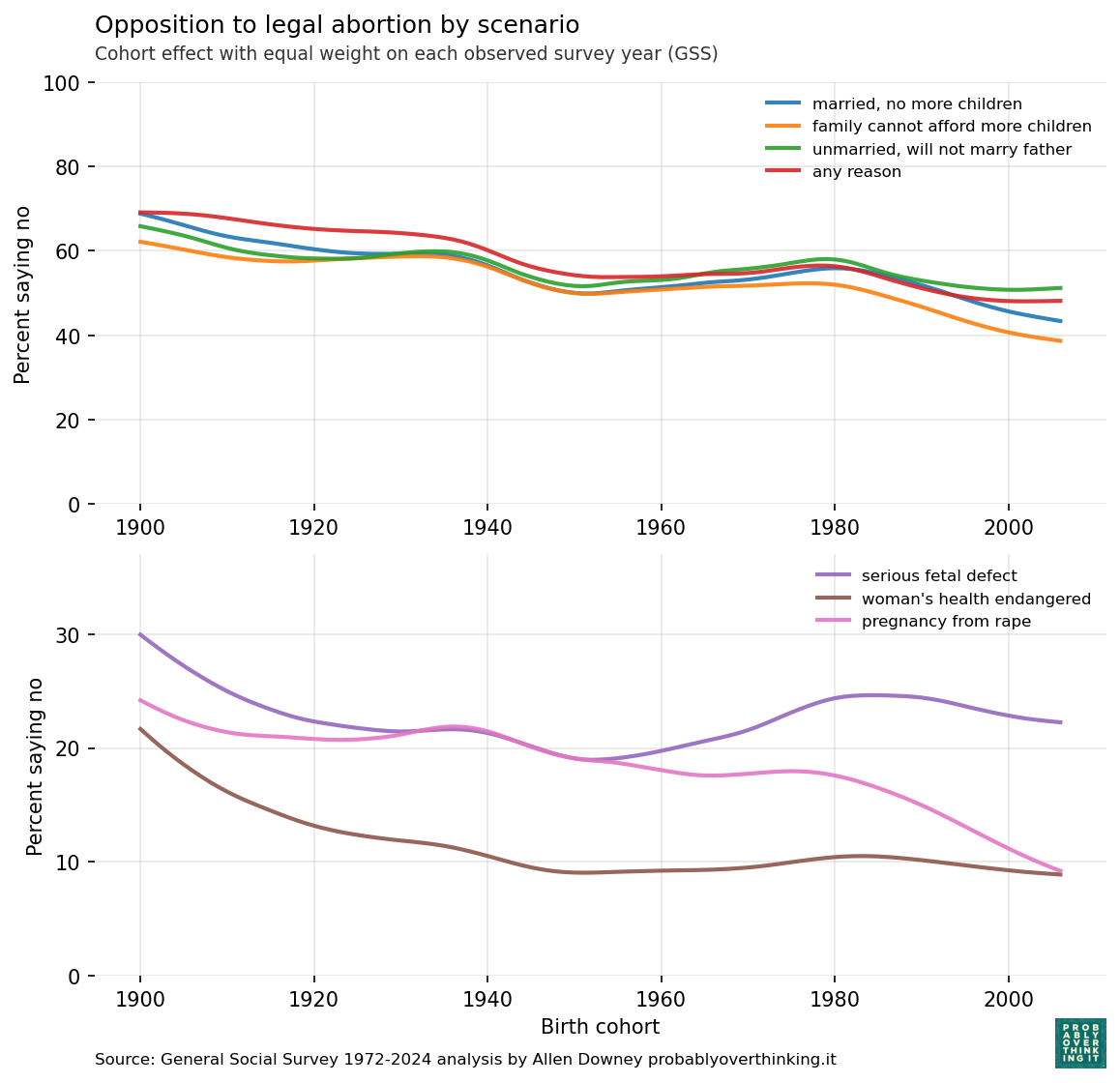
Figure 6:Combined cohort margins (uniform years), all seven items.
Links
Technical report: Technical Report
Related posts: Happiness, Trust, Religious preference
Project task: Task 22 in the repo
PROJECT_BOARD.md; sampling diagnostics:notebooks/tables/model10_abortion_sampling_diagnostics.md